
dovetail
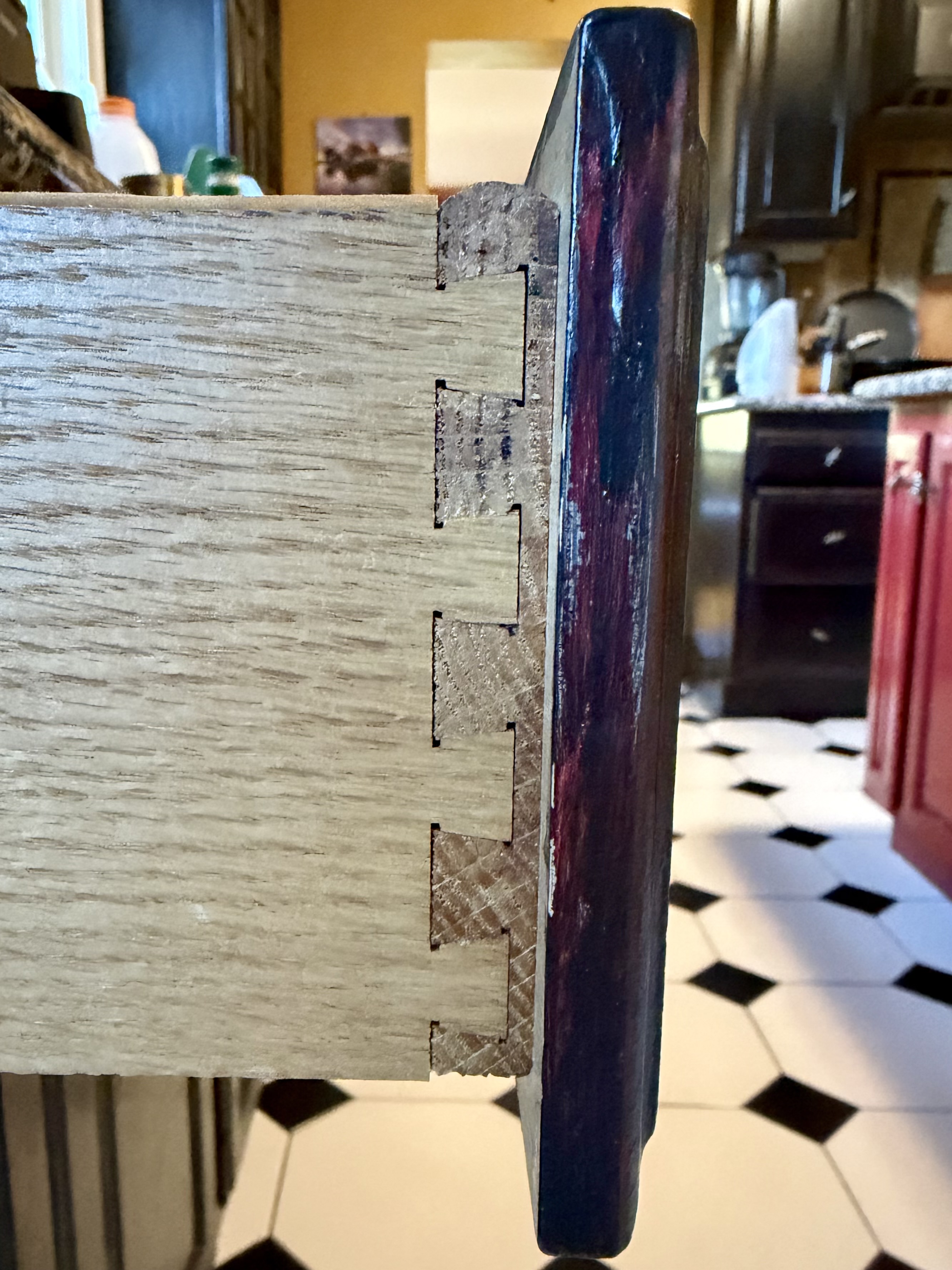
a dovetail joint
I’m thinking a lot about Dovetail lately.
As he so often did, Neal Stephenson predicted the future in 1995’s The Diamond Age1. He doesn’t specify, but the book is probably set at some point in the 22nd century. The central technological conceit in the novel is that we’ve mastered nanotechnology. Autonomous bots no bigger than human cells are in common use for war/defense, surveillance, communications, medicine, bodybuilding, engineering, and, in a particularly memorable and evocative early sequence, for implementing capital punishment.
It would follow that traditional manufacturing techniques wouldn’t apply for creating quadrillions of these microscopic machines. Indeed, they are assembled atom-by-atom in “matter compilers.” These matter compilers (MC’s) are also deployed around the world as a public utility, able to produce just about anything quite rapidly. Food, clothing, and other objects are assembled in the MC’s just for the asking. A giant, centralized distribution network called The Feed provides the raw materials (elements and energy) for the MC’s.
It’s a fascinating bit of world building where anything you want or need is freely available. There is, maybe curiously, still a significant degree of economic inequity in this world, and it turns out that the MC’s are mostly used for making things like food and other basic needs for the poor. The rich, especially those whose cultures derive from the current-day West (“Neo-Victorians”, or, derisively, “Vickys”), prefer artisanal, bespoke, hand-built items over the generic, identical, mass-produced items from MC’s.
The young protagonist, Nell, escapes from her addict mother and her abusive boyfriend, and eventually finds herself in a place called Dovetail, which is populated exclusively by the artisans who craft the lovely things for the Vickys. She encounters people making hand-pressed paper, beautiful leather saddles (that will in some cases be used on robotic horses, amusingly), wooden furniture, and other such items that would seem more in place four centuries before the events of the novel. There are no matter compilers in Dovetail; it’s a place where the old ways for the most part aren’t just in vogue, they’re the only ways. Nell has to leave her prized possession, the titular Primer2, essentially a sophisticated computer3, at the Constable’s house on the border before she can explore Dovetail further.
I confess I’m not sure exactly what commentary Stephenson was trying to make with this sub-plot and setting, if any, but I don’t think he was deriding either the people who still made beautiful things with their hands in a world where that was no longer necessary, nor the people who would want such things. I mean, he’s a guy who later wrote The Baroque Cycle, a three-volume work clocking in at over 1,000 pages, using a freaking fountain pen. Maybe he’s taking no editorial stance at all. Maybe he’s just drawing the contrast between mass production and hand craftsmanship without making a value judgement and leaving that part to the reader. I know that when I first read the book thirty years ago, the whole idea seemed silly or overly precious to me. I don’t feel that way any longer.
Have you ever tried to make a dovetail joint? Especially with hand tools? I remember trying it decades ago with my uncle, using a very fine Japanese handsaw to cut the ends of the boards, having previously marked the cut lines with pencils. It’s really, really hard to get a good looking, functional joint this way. To become proficient at this would take years of practice, generating a mountain of scrap lumber along the way. You’d have to really want it. There’s a more technical, modern way to do it with special jigs and a power router. Anyone with more than beginner level woodworking experience can probably manage craftsman-grade joinery with this setup in a fairly short time. It’s not quite the same thing as punching buttons on a matter compiler, some kind of middle ground between the handsaw and there, I suppose. My point is, he chose the name of the place well.
I saw a post on Bluesky recently, which unfortunately I can’t find right now. It was about some manager at some software shop deriding a developer who was writing code by hand. It’s not important that I can’t find the post right now, since that anecdote may have been apocryphal or even straight fabrication. But it doesn’t matter: that idea is very much out there. If you’re not using LLM’s4 to write, debug, and test your code, you’re already a dinosaur. If you’re in the industry you see this every day; if you’re not, please take my word for it, or just google it. Being on the inside of a company that builds a software platform which others use to build yet more software doesn’t just give me a front row seat, it puts me on the stage. We build our product with LLM’s, our customers use LLM’s to build applications with our product, etc. It’s all we talk about for 90% of the workday, turtles all the way down.
The speed at which this happened, and is still happening, is astonishing. I have an employee returning from a six-month leave soon, and the job will be unrecognizable to them. Some intensive training is going to be in order upon their return. It’ll be no less jarring than landing on the Planet of the Apes. And, if anything, this revolution is only gaining speed. For the first time in my career, I have no idea what the job will look like in another six months. This rate of change can’t continue, can it?
About a year ago they made me a manager, so my day-to-day responsibilities are way less code-y than they used to be. I still sit in all the technical meetings, provide guidance, help with architecture, etc. I have to understand this stuff at a deep level. The job is still hard tech, just in a different idiom. The direct impact of the LLM’s on my own work, with my own hands on the keyboard, is more about using those tools to tighten up a PowerPoint presentation, or to summarize the often voluminous documentation I receive.5 I don’t have much time these days, nor am I much expected, to write and deliver code using this tooling or anything else.
It’s for the best, really. I was never all that great at it. I’ve always been better on the people side of things, which, fortunately for me, is the area least likely to be impacted by the machines in the remaining time horizon of my career. I should never say never, but I’m pretty confident we’re not all that close to just appointing LLM’s to manage people, though surely some will try.
That said, I do sometimes miss the coding part. At least how it used to be. There was immense satisfaction to be found (for me) in breaking big problems into little ones, solving them in turn, and assembling the results back into a whole. It’s a bit like writing, or even playing music, though using different parts of the brain. The feeling of being in the zone, and the feeling of accomplishment at the end, aren’t all that different from other creative endeavors. Other creative endeavors which, I should also point out, are being dramatically impacted by LLM’s, and whose practitioners are working through similar revolutions around their art, and the value of it.6
I’m in the earliest stages of thinking about retirement. It’s still an indeterminate and not small number of years off in the distance, but it’s not too early to start doing the math. I’ve picked up some books on the topic, and while they all inevitably get to the nuts and bolts of figuring out how much money you need and how to make it last, they all also challenge the future retiree to think about how they want to spend their days. Not only because that will inform the financial part—if you want to travel the world and play expensive golf courses, you need a different kind of plan than you do if you just want to walk in the woods near your home, or read all day.
It’s more than that, though. It’s about purpose and intentionality. Breaking through the tape at the end of the rat race isn’t enough by itself to sustain a person for (hopefully) another couple/three decades. So on the advice of these authors, I’m trying to spend at least as much time thinking about the color and shape of my future days as I am about investment returns and the tax implications of minimum IRA distributions.
I have some ideas starting to crystallize. Others are still quite fuzzy. All of it could change! One certainty is that I will be regularly making things with my hands. Music is at the front of the list, of course, and writing counts, too, but I’m talking about getting back into my shop. For the last few years, my workbench has sat mostly idle. Either I’m on the road or I’m exhausted after 10-12 hours of the daily grind. There’s never time or energy left for working metal or canvas or wood. So the first thing I am going to do after that last paycheck clears is master the hand-cut dovetail joint. And if by chance I need to write a little program to design some aspect of what I’m building, or for that matter to tidy up the infrastructure of this blog, I’ll do that by hand, too. Using machines to speed up your work makes a lot of sense in the commercial realm, and that’s exactly the place I will ideally be leaving behind for good.
-
Full title: The Diamond Age: Or, A Young Lady’s Illustrated Primer. ↩︎
-
He also predicted the consequences of widespread remote/online education by non-human means. Spoiler alert: it doesn’t work out all that well. Nell’s edition did have a live teacher on the other side, and it made all the difference. ↩︎
-
As long as I’m musing on the events of my favorite fiction writers: sometimes I think about The Butlerian Jihad, too. ↩︎
-
LLM means “large language model.” Most people call LLM’s “artificial intelligence.” I have a lot of problems with that term, so unless I’m in a hurry, or speaking to someone who doesn’t know the term, I prefer to call them what they actually are. ↩︎
-
The more voluminous, the more likely it was generated by an LLM. Computers summarizing the output of other computers. ↩︎
-
It probably goes without saying but I’ll say it anyway: I will never, ever use an LLM to generate any content you read, hear, or see here. ↩︎